
Surrounded by the prevailing opinions within the medical community, I kept my thoughts and ultimate decision about home birth silent. I was determined to surround myself with positivity and empowerment on the topic to avoid any added anxiety. As this was the case, my hope for home birth became a significant reason for keeping my pregnancy concealed to my colleagues.
Not because I was ashamed of it.
But because I wanted to protect my peace.
For me, home birth wasn’t a last-minute decision.
It had been part of my story long before I became pregnant. In many ways, it began when my mother was deciding how she wanted to bring me into the world.
Since I was a child, I viewed home birth as the way birth naturally unfolded when pregnancy remained healthy. I trusted in the body’s innate ability to labor and give birth when pregnancy remained healthy and low risk.
I am one of three children. My mother’s first birth was in the hospital. Drugs given without true consent and a “routine” episiotomy against her wishes, led to significant trauma that haunted her long after the birth itself. She knew she wanted more children, but she would ensure the next experience was her own.
She crossed paths with a Mennonite home birth midwife. Impressed by her track record for successful home births, she did something unexpected in the 1990s, and decided to hire her for home birth. She continued care under her OB, and simultaneously with her midwife. Her second birth was a successful, peaceful, home birth – delivering me into the world.
My younger sister was brought into the world the same way, by the same midwife. I remember her gentle birth on our family couch, with my mother surrounded by family and love.
From childhood through adulthood, home birth was discussed as a healthy, safe, and comfortable way to give birth.
Growing up, I knew I wanted to be a mother. To get there, I knew I wanted to opt for home birth.
For that reason, pursuing lifelong health and fitness was never just about athletics or appearance—it was also about preparing my body for the pregnancies and births I hoped to have one day.
🌿 Where Medicine Meets Motherhood
During medical school I often felt that the few conversations about home birth focused almost entirely on what could go wrong.
My own experience led me to ask a different question:
What does the evidence say for healthy, low-risk pregnancies cared for by qualified providers?
I wasn’t looking to reject medicine. I aimed to honor it as a life-saving support when physiologic birth requires it, while also respecting nature’s magnificently crafted design for pregnancy, labor, and delivery.
When I found out I was pregnant, home birth was my immediate thought.
But there was still the uncertainty that comes with every first birth. I didn’t know what labor would ask of me. I knew that many within the medical community viewed home birth as irresponsible or unnecessarily risky. And, I wasn’t yet sure whether Chris—also a medical student and soon-to-be emergency medicine resident—would be open to the idea.
When Chris and I first talked about home birth, many of the concerns he raised reflected the common questions and misconceptions surrounding midwife care and home birth that persist today.
His initial sentiment was that midwives are not equipped to handle prenatal care and birth without the oversight of doctors.
What would prenatal care with a midwife actually look like?
Questions We Needed Answered
- How would prenatal care compare?
- Could midwives prescribe medications?
- How would I be monitored throughout pregnancy?
- What would happen if complications arose?
- What about exams and care for the baby after birth?
I had anticipated these questions from him. But to be honest, despite my want for home birth since I was a kid, I was not sure of all the answers. What did care look like when you choose home birth? And what were the numbers on the risk?
I started doing what I do. I dove into the research.
As I reviewed the evidence, I became increasingly confident that, for low-risk pregnancies attended by qualified midwives, planned home birth was a reasonable option for our family.
🧠 Med Minute: What Does the Research Say About Planned Home Birth?
In the U.S. about 1/3rd of hospital births end in cesarean. Higher rates of induction, augmentation, and electronic fetal monitoring utilized by hospitals independently correlate with higher surgical delivery rates. The World Health Organization states that cesarean section rates higher than 10% are not associated with reductions in maternal and newborn mortality rates. Despite this, these high cesarean statistics continue to persist. Meanwhile, planned home birth cesarean rates are recorded as 3-8%.
Beyond the physical outcomes, a major multinational study published in the peer-reviewed journal Women and Birth found that women who planned home births rated their experience 9.7 out of 10, compared to an average score of just 5.5 out of 10 for hospital births.
Regarding midwife prenatal care, I was pleased to have my questions answered more fully during home birth midwifery group interviews.
Wanting my decision to be grounded in intuition as well as evidence, I considered home birth midwifery groups, as well as birthing centers in the area. A birthing center was something I was willing to consider if Chris was entirely opposed to home birth.
But the home birth midwifery group I was most highly considering explained that prenatal checkups would include all standard prenatal care – vitals, bloodwork, measurements, and ultrasounds.
The midwifery practice also walked us through the equipment and medications they routinely bring to every birth. While hospitals maintain resources such as blood products, epidural anesthesia, and surgical capabilities, I was reassured by the scope of equipment and medications available through qualified home birth midwives. They also offered comprehensive newborn care, including vitamin K (injectable or oral), antibiotic eye ointment, newborn weighing, genetic screening, and more, depending on family preference.
Together, we weighed our options and decided to pursue care with my top-choice home birth midwifery practice. I would at least have prenatal care with them until we decided between home birth and a birth center.
If you’re currently weighing hospital birth, birth center, or home birth—or deciding who you’d like to provide your prenatal care—I go into those considerations in more detail in my guide, Choosing Your Prenatal Care Team & Birth Place.
To be honest, Chris and I went back and forth about the decision several times – well into my second trimester.
Ultimately, I knew I would feel safest, most calm, and most comfortable in our home (all components which would support hormonal effectiveness in efficient progression of physiologic labor), under the intimate care of a small team – partner, doula, midwife, midwife assistant.
But we still needed a boost of encouragement.
When interviewing our selected Doula, she asked what birth setting we hoped for. I told her about our proclivity toward home birth but that birth center was still on the table.
Her reply was gentle, but confident. “I’ve found parents that want home birth do better committing to the home birth experience over a birth center. A birth center is a nice option if that is what you are going for, but it is not the same if you imagine home birth.”
I appreciated her words. I think it helped Chris to hear this, too.
I felt more confident in our home birth decision.
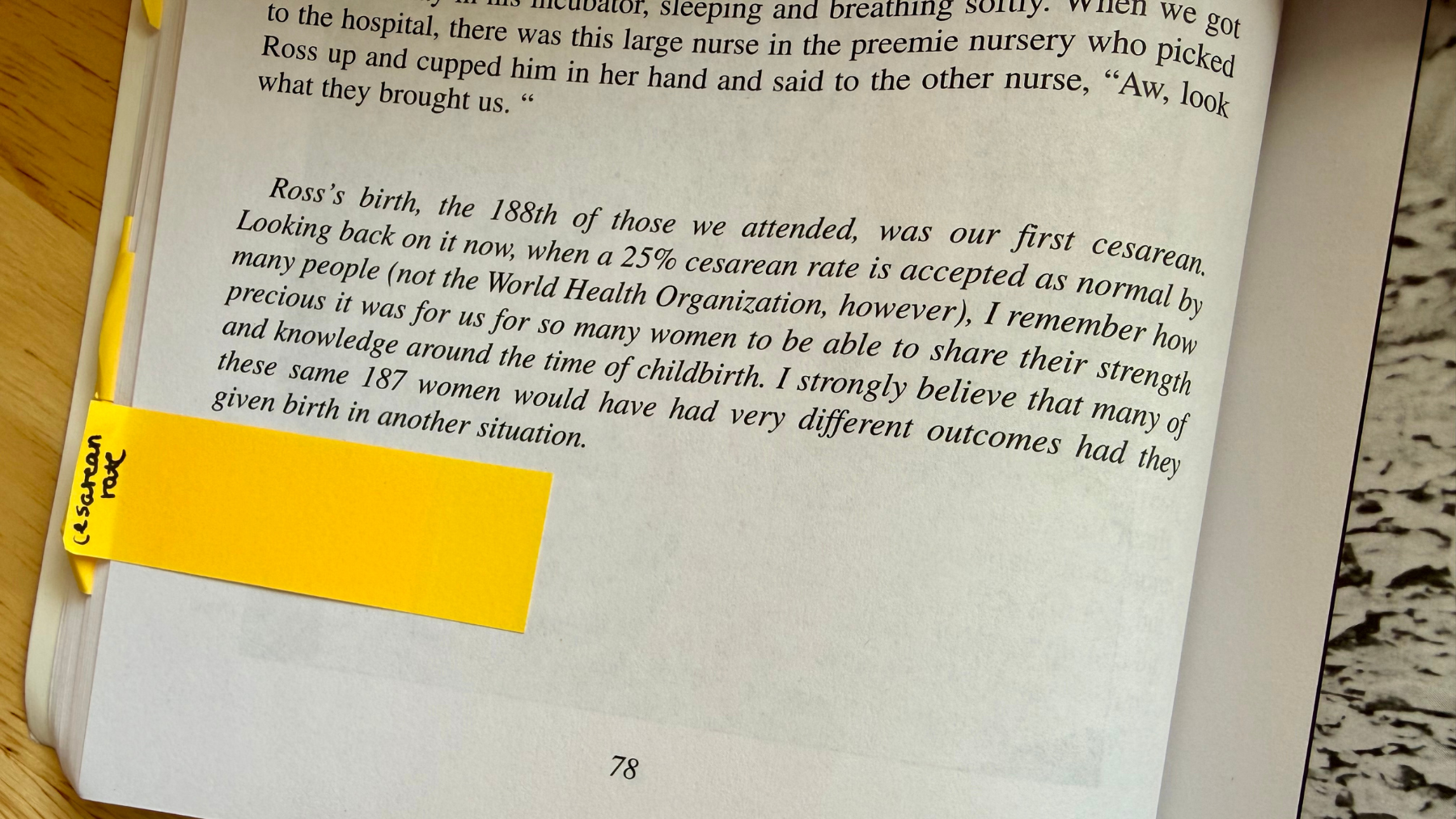
There was a lot I did to build my mental and physical preparedness for home birth, but a single sentence hidden in the middle of one of my birth books gave me a confidence that I carried with me for the rest of my pregnancy.
I was relaxing back at my hotel during a medical conference when I read the following line from Ina May Gaskin’s Spiritual Midwifery.
“Ross’ birth, the 188th we attended, was our first cesarean.”
I stopped.
Read it again.
187 vaginal births in her community, most of which out-of-hospital, before a single cesarean.
This sentence stayed with me.
I could do this.
We would have a home birth.
For the first time since learning I was pregnant, I felt at peace with our decision.
From there, my focus shifted from choosing a birth setting to preparing for the birth itself. I immersed myself in resources that would educate, encourage, and empower me for the birth I hoped to have.
I’ll share those resources—and how I prepared my body and mind for labor—in the next post.
Every family arrives at their birth decisions differently.
If you’ve considered a home birth, birth center, or hospital birth, I’d love to hear what factors shaped your decision. And if you’re still exploring your options, feel free to share your questions in the comments below.